


INTRODUCTION
MATERIALS AND METHODS
Experimental site
Experimental design and treatments
Soil moisture content and electrical conductivity
NO3--N and NH4+-N contents in soil water
Analysis of Photosynthetic Indicators
Growth and yield
Statistics
RESULTS AND DISCUSSION
Weather changes during the experimental period
Changes of soil moisture content and electrical conductivity
Effects of irrigation and fertigation treatments on photosynthetic indicators
Growth characteristics of above-ground and underground parts
Growth and yield characteristics
CONCLUSION
INTRODUCTION
Maize is one of the most important food crops worldwide. Maize is also used extensively in human nutrition, biofuels, and the livestock industry. Maize has traditionally been grown as a staple food alternative in Korea, particularly in mountainous regions where rice and barley cultivation are difficult. It is also a high-value industrial crop grown extensively in the southern plains for food or snacks (Baek et al., 2020). In Korea, maize is cultivated as a single cropping in the spring or summer, as well as double cropping throughout the year. However, recent climate change has resulted in heavy rainfall and an increase in drought frequency throughout the year, with maize yields predicted to decrease by 18.6-46.6% in the long term (Mi et al., 2018; Siebers et al., 2017). Maize growth and yield may be reduced when water is restricted, even though maize requires a lower amount of water than other crops (Pandey et al., 2000). As a result, it is necessary to efficiently improve conventional nutrients and water management strategies in order to maintain stable maize productivity. The proper supply of nutrients and water during the growing season has a significant impact on maize growth and yield, particularly during the V6 and silking stages (Cakir, 2004; Kumar et al., 2018). Drought stress during these growth or developmental stages can delay ear growth, prolong the anthesis-silking interval, and disrupt fertilization. These effects can subsequently influence ear weight and kernel number, potentially leading to a yield reduction of 30% to 90% (Ashraf et al., 2016; Lamlom et al., 2024).
Currently, some maize farms use ridge irrigation or drip irrigation, but most farms rely on natural rainfall (Kim et al., 2023b). Recently, the technique of subsurface drip irrigation (SDI) system that can supply water and nutrients to the root zone is attracting worldwide attention (Aydinsakir et al., 2021; Kim et al., 2025). Despite the high initial installation costs, SDI can be used semi-permanently with only one installation by burying the drip tubes 30 to 40 cm underground. Using an SDI system can reduce production costs, save labor after the initial installation, and effectively supply water and nutrients to plants at optimal times with an automatic irrigation system (Kim et al., 2023a). SDI, in particular, has the potential to reduce the production of CO2 and CH4, which are known to be the main factors leading to global warming, by 20% and 80%, respectively (Guardia et al., 2023). SDI is a type of microirrigation that may supply water, nutrients, and other chemicals/substances directly to the root zone through the drip tubes using pump pressure. The depth of buried drip tubes is generally the soil tillage layer, although it can also vary depending on crops. SDI can play a significant role in environmental conditions with restricted water supply areas. SDI has been reported to reduce water use by 35-55% and increase the yield of maize compared with other irrigation systems (Irmak et al., 2016). Furthermore, SDI is known to improve yield in various kinds of crops, including chickpeas, cotton, clementine trees, lemon trees, alfalfa, peanuts, sorghum, pomegranate, potatoes, soybeans, and winter wheat (Goebel and Lascano, 2019; Kumar et al., 2007; Pendergast et al., 2019).
For the last 40 years, maize production has increased worldwide as a result of increased nitrogen (N) application (FAO, 2018). The increase in nitrogen application to the field correlates positively with higher crop yields. Increased N application in the field can temporarily improve yield, but continued N application may reduce plant N efficiency and ultimately decrease yield (Liang et al., 2020; Su et al., 2020).
As a result, it is necessary to determine the application of the optimal N amount that does not damage maize yield or the environment while using the SDI, as well as the effect of this optimal N amount on photosynthesis and root growth. In addition to N management, the utilization of liquid fertilizer (LF) in all crops continues to rise; furthermore, it has also been reported that the LF application in maize improves sugar and yield, and reduces environmental pollution (Lee et al., 2019; Park et al., 2022). Thus, it is necessary to assess its effectiveness to increase the utility of SDI.
Therefore, this study aimed to evaluate the effectiveness of subsurface fertigation applied to different maize cultivars, specifically examining N and LF fertigation through topdressing during the V6 and silking stages of maize growth using an SDI system.
MATERIALS AND METHODS
Experimental site
This experiment was conducted during the spring cultivation period of 2024 at the experimental farm of Gyeongsang National University, located in Gajwa-dong, Jinju-si, Gyeongsangnam-do, South Korea. Prior to SDI installation, the field was leveled using a tractor. Subsurface drip tubes (ID 14.2 mm, wall thickness 1.00 mm, flow rate 1.60 L h-1, spacing 0.3 m; Netafim, Uniram CNL, Hatzerim, Israel) were buried at a depth of 40 cm in the field utilizing a subsurface drip tube burying machine (patent number: 10-2479896-000, RDA, Korea). Additionally, an automatic subsurface drip irrigation and fertigation system (WT-2000, Mirae Sensor, Seoul, Korea) was installed to manage water and nutrient supply.
The soil chemical and physical properties of the experimental field before treatment are presented in Tables 1 and 2. This experiment, as part of a consecutive-year study (Rural Development Administration: PJ015754), was conducted under the same soil conditions as those in previous reports (Cho et al., 2025; Kim et al., 2023b; Kim et al., 2025). Meteorological data were obtained from the Korea Meteorological Administration portal (KMA, 2024).
Table 1.
Soil chemical properties at the experimental site.
|
pH (1:5) |
EC (dS m-1) |
P2O5 (mg kg-1) |
T-N (%) |
O.M. (g kg-1) | Ex. cation (cmol kg-1) | |||
| K+ | Ca2+ | Mg2+ | Na+ | |||||
| 7.15 | 0.08 | 265.0 | 0.09 | 13.3 | 0.22 | 7.25 | 0.58 | 0.44 |
Table 2.
Soil physical properties at the experimental site.
| Three phases of soil |
Soil hardness (mm) | Soil characteristic | ||||||
| Clay | Sand | Silt |
Bulk density (Mg m-3) |
Soil texture | ||||
| Solid | Liquid | Gas | ||||||
| (%) | ||||||||
| (%) | ||||||||
| 56.5 | 14.0 | 29.5 | 7.2 | 10.2 | 56.7 | 32.2 | 1.5 | sandy loam |
Experimental design and treatments
The experimental plot (total area 100 × 12 m) was divided into three replicates using a randomized block design. The maize cultivars used in the study were ‘Ilmichal’, a waxy corn, and ‘VSC03’, a super sweet corn. ‘Ilmichal’ was sown in a nursery bed on March 16, 2024, while ‘VSC03’ was sown on March 7, 2024. Both cultivars were transplanted to the main field on March 30, when the true leaves had emerged, with a spacing of 80 × 15 cm. Fertigation treatments were applied on May 2nd (V6 stage) and June 6th (silking stage). The harvest was conducted on July 4, 2024.
Fertilization rates were based on the standard amount of fertilizer for maize (N-P2O5-K2O: 14-3-6 kg 10a-1). For the basal fertilizer application, all phosphorus and potassium and half of the nitrogen were applied. The remaining half of the nitrogen was applied as a topdressing through fertigation (Fig. 1). The basal fertilizer used for maize cultivation was a compound fertilizer (Chamsedae, N-P2O5-K2O: 22-7-9, KG Chemical, Ulsan, Korea), with a primary focus on nitrogen supplementation. To compensate for potential deficiencies in phosphorus and potassium, soluble phosphorus fertilizer (fused phosphate, P2O5 21%, Pungnong, Seoul, Korea) and potassium chloride (KCl, 60%, Farmhannong, Seoul, Korea) were additionally applied. These basal fertilizers were broadcast evenly over the field and incorporated into the soil using a rotary tiller before transplanting.
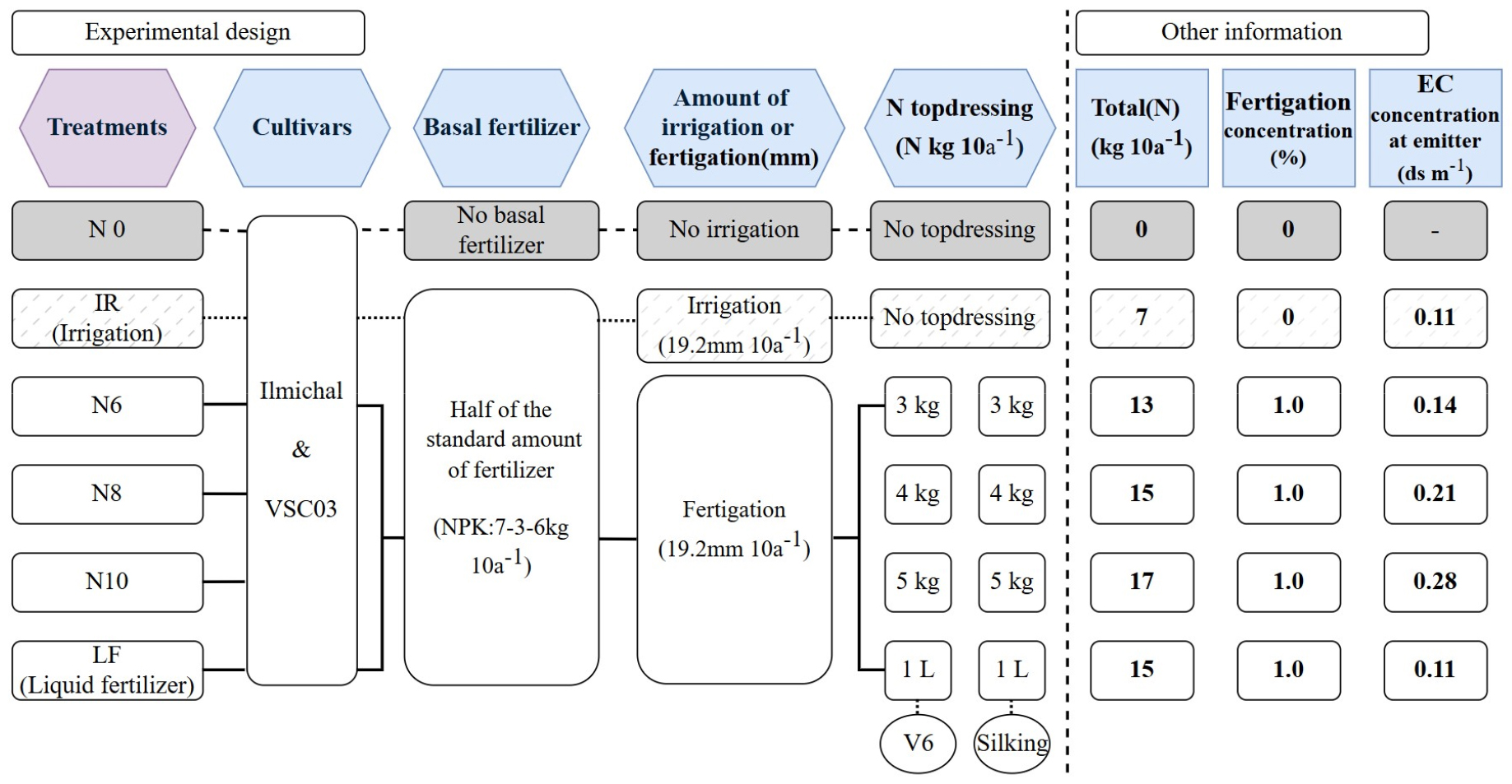
Fig. 1
Schematic illustrating the experimental design. N represents the amount of nitrogen applied (kg 10a-1). Irrigation amount refers to the amount of water applied at one time. The application amount (1 L) of liquid fertilizer (LF) indicates the volume for 500-fold dilution. V6 and silking are maize growth stages and indicate the timing of fertigation treatments.
The nitrogen (N) fertilizer topdressing treatments included N6 (6 kg 10a-1), N8 (8 kg 10a-1), and N10 (10 kg 10a-1) (Fig. 1). N topdressing, using ammonium sulfate (21%), was applied through the SDI system. Liquid fertilizer (LF; N-P-K: 9-4-2%, soluble B 0.05%, soluble Mo 0.0005% and soluble Zn 0.05%, Jijitech, Hanam, Korea) was diluted at a ratio of 1:500 and applied to adjust the nitrogen level to N8 (8 kg 10a-1) among nitrogen treatments. This fertilizer was a fermented amino acid fertilizer rich in animal-derived amino acids and nitrogen.
The control treatment (N0; no basal fertilization, no topdressing, no irrigation) received neither water nor fertilizer, including the basal fertilizer. Each topdressing treatment was divided into two equal portions, with one applied via fertigation during the V6 stage and the other during the silking stage. For each fertigation treatment, the corresponding fertilizer amount was dissolved in 192 liters of water to prepare a stock solution, which was applied through an SDI system at a 1% concentration (The total irrigation amount is 19.2 mm 10a-1). The application was conducted using a liquid fertilizer mixer (Mixrite, 2.5 m3 h-1; Tefen, Kibbutz Nahsholim, Israel). The irrigation (IR) treatment received basal fertilization, but was supplied only with water at the topdressing times without any additional fertilization.
Soil moisture content and electrical conductivity
To measure soil moisture content and electrical conductivity (EC) under subsurface drip irrigation and fertigation, sensors (Watchdog SMEC 300, Spectrum Technologies Inc., Chicago, USA) were installed at depths of -40 cm, -30 cm, -20 cm, -10 cm underground, at the soil surface (0 cm), and at +10 cm (ridges) (Fig. 3). Data were collected using a data logger (Watchdog 2400, Spectrum Technologies Inc., Chicago, USA) (Figs. 3, 4). The changes in soil moisture content and EC following irrigation and fertigation treatments were monitored in the N8 and IR treatments, between June 1 and June 17, 2024 (Figs. 4, 5).
NO3--N and NH4+-N contents in soil water
Soil water was collected at various depths using a soil water collector (DIK-8392, Daiki Rika Kogyo Co., Ltd., Saitama, Japan) during subsurface fertigation treatments. The concentrations of NO3-N and NH4+-N in the collected soil water samples were analyzed according to the Kjeldahl method.
Analysis of Photosynthetic Indicators
The photosynthetic indicators were measured using a portable photosynthesis system (LI-6800; LI-COR Biosciences, Lincoln, NE, USA) under natural clear-sky conditions. The instrument settings were as follows. Measurements were conducted using a standard 3 × 3 cm chamber aperture. To minimize external environmental fluctuations, the chamber's flow rate was maintained at 600 μmol s-1, and the temperature was maintained at 25℃. The CO2 concentration, fan speed, and air relative humidity were set to 400 μmol-1, 5,000 rpm, and 25%, respectively. For each treatment, ten maize plants were selected, and the fourth fully expanded leaf of each plant was measured. Photosynthetic indicators were assessed during the early-growth stage, two weeks after the maize was transplanted into the main field. Subsequently, measurements were conducted at monthly intervals during the middle and late-growth stages to investigate changes in photosynthetic indicators over the different growth stages. The overall photosynthetic characteristics throughout the entire growing season were then determined by averaging the values obtained from each stage (Fig. 6).
Growth and yield
The aboveground growth characteristics, such as stem height, ear height, leaf area, stem diameter and yield components such as ear length, ear width, ratio of kernel set length to ear length [RKSEL], hundred kernel fresh weight, number of kernels and ears, and fresh ear yields (weight of corn without husk) were investigated at harvest time according to Korean Rural Development Administration survey standards. The number of plants investigated was expressed as the mean of 30 plants from three replicates; 10 plants per row made up one replicate in each of the subsurface fertigation treatments. Leaf area was calculated as leaf length × leaf width × 0.75 (Musa and Usman, 2016).
To determine the root growth according to different amounts of N topdressing using an SDI, the roots from each treatment were collected by soil depth at harvest time. The images were acquired using a scanner (Expression 12000XL professional scanner, Epson America Inc., Los Alamitos, CA, USA). The volume, length and surface area of roots were measured from the acquired image data using WinRhizo Pro 2020 (Regent Instruments Inc., Sainte-Foy, QC, Canada).
Statistics
The data were analyzed using one-way analysis of variance (ANOVA) in SPSS version 21 (IBM Corp., Armonk, NY, USA). Statistical differences between mean values were determined using Duncan’s multiple range test (DMRT) at the P < 0.05 level. Since ‘Ilmichal’ (waxy corn) and ‘VSC03’ (super sweet corn) are different types of cultivars, statistical comparisons were performed separately for each cultivar.
RESULTS AND DISCUSSION
Weather changes during the experimental period
During the experiment, the average temperature in March, the sowing season, was 8.7°C, which was above the normal year value (Fig. 2). Also, precipitation during this period was approximately 1.1 times the normal year value (84.2 mm). During April and May, which correspond to the vegetative growth stages, the average temperatures were 2.5°C and 0.8°C higher than the normal year value, respectively. The precipitation values during these months were 170 mm and 180 mm, which are 1.4 to 1.6 times the normal year values. In June, the flowering period of maize, the average temperature was 1.4°C higher than the normal year value, and precipitation was 193 mm, 1.4 times the normal year value. In July, the maize harvest period, the average temperature was 2.0°C higher than the normal year value, with 0.7 times precipitation. Overall, the average temperature during the experimental period was 0.8-2.5°C higher than the normal year value. Additionally, total precipitation during the entire growth period was 0.7-1.6 times the normal year value.
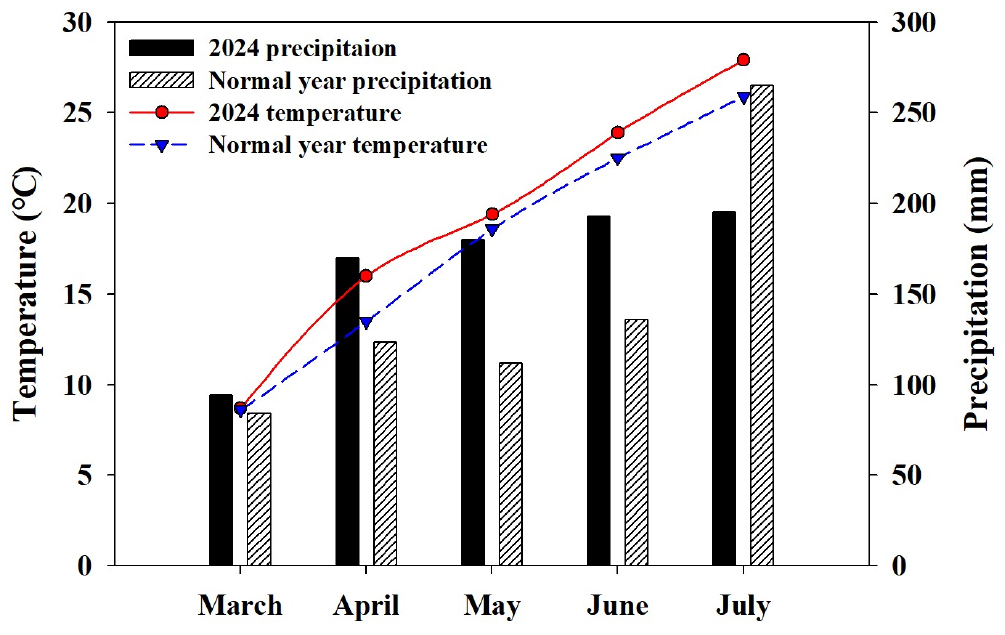
Fig. 2
Historical monthly climate data during the growing season in the experimental area. Red and blue lines indicate the mean temperatures in 2024 and the normal year temperature, respectively. Bars represent monthly cumulative precipitation (black: 2024; striped bars: normal year precipitation). Normal year mean for 2014–2023.
Changes of soil moisture content and electrical conductivity
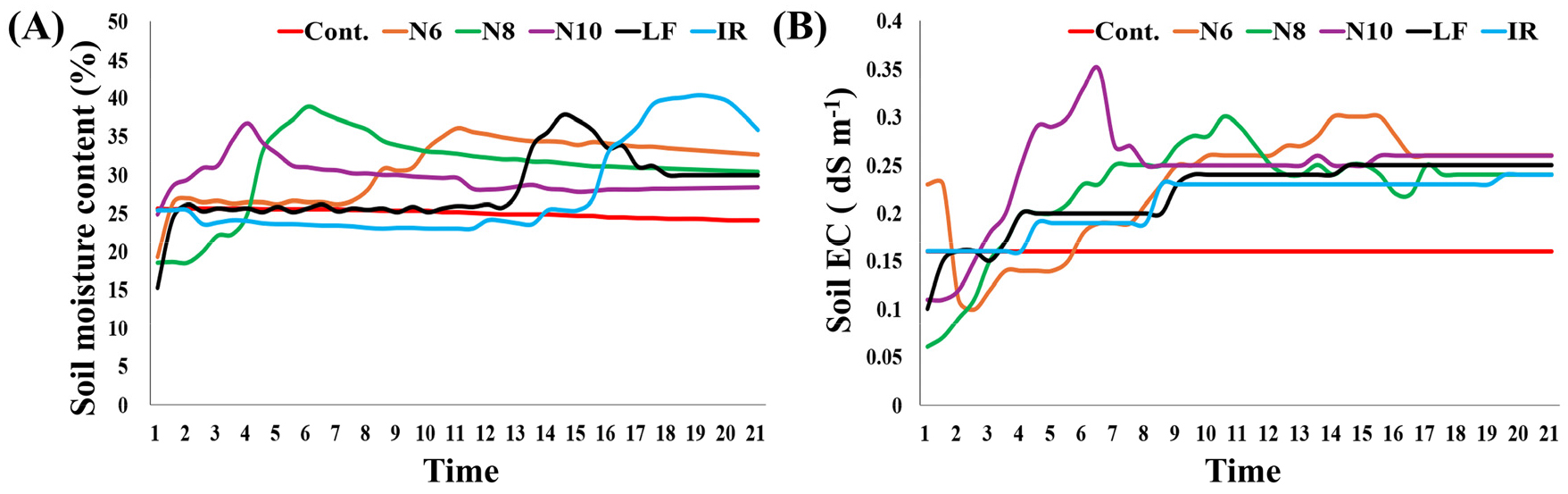
A previous study (Kim et al., 2023b) was conducted at the same site as this field to determine the optimal irrigation amount based on subsurface fertigation. The results indicated that an irrigation amount of 19.2 mm 10a-1 resulted in soil saturation at a depth of -10 cm underground, where the roots were most densely distributed. Consequently, this irrigation amount was used as the basis for dissolving and applying fertilizer across all treatments. Due to the experimental field conditions that precluded the simultaneous application of all treatments, each treatment was irrigated and was fertigated sequentially (Fig. 3). To verify the effectiveness of subsurface irrigation and fertigation, soil moisture content and electrical conductivity were measured within the ‘Ilmichal’ cultivar treatment area. The results confirmed that the soil moisture content at a depth of approximately -10 cm increased to 30% or higher in all treatments within 4 to 5 hours following the initiation of irrigation and fertigation (Fig. 3A). The EC increased in the order of N6, N8, N10 and LF as the fertilizer concentration increased, indicating that the treatment was conducted properly. Furthermore, the EC exhibited a tendency to increase following soil moisture saturation, confirming that the fertilizer dissolved in water was effectively supplied through the SDI system (Fig. 3B).
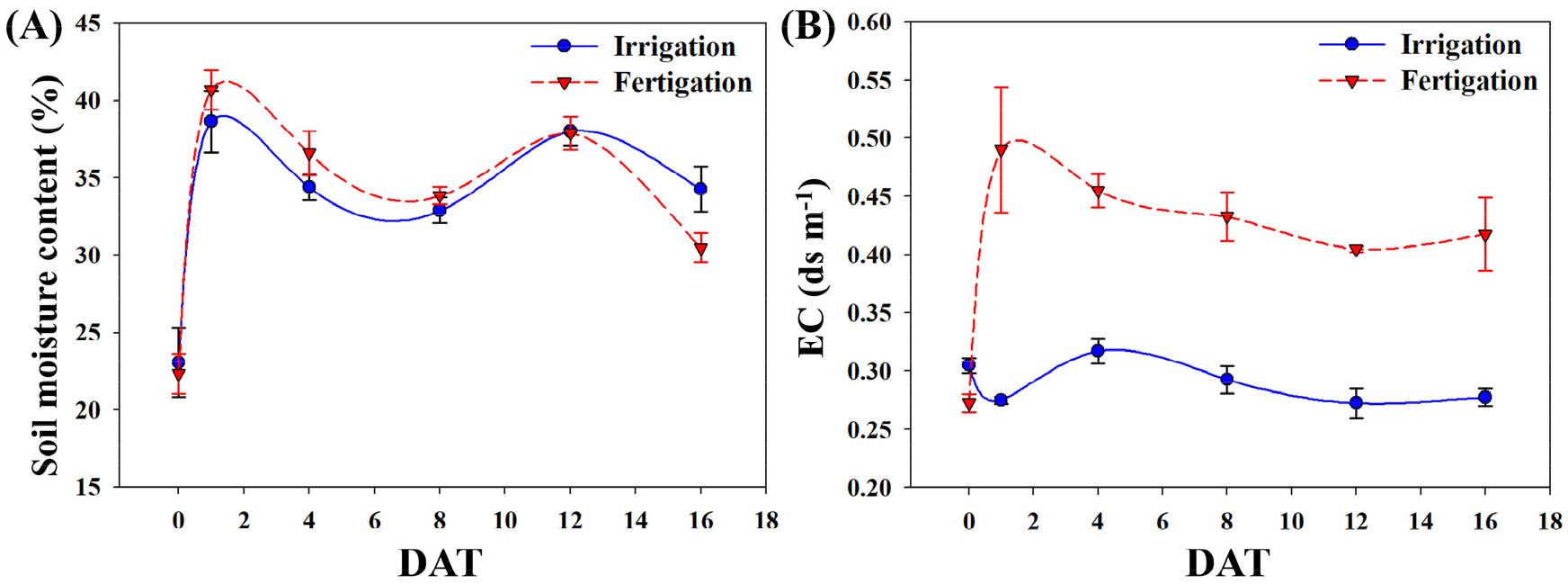
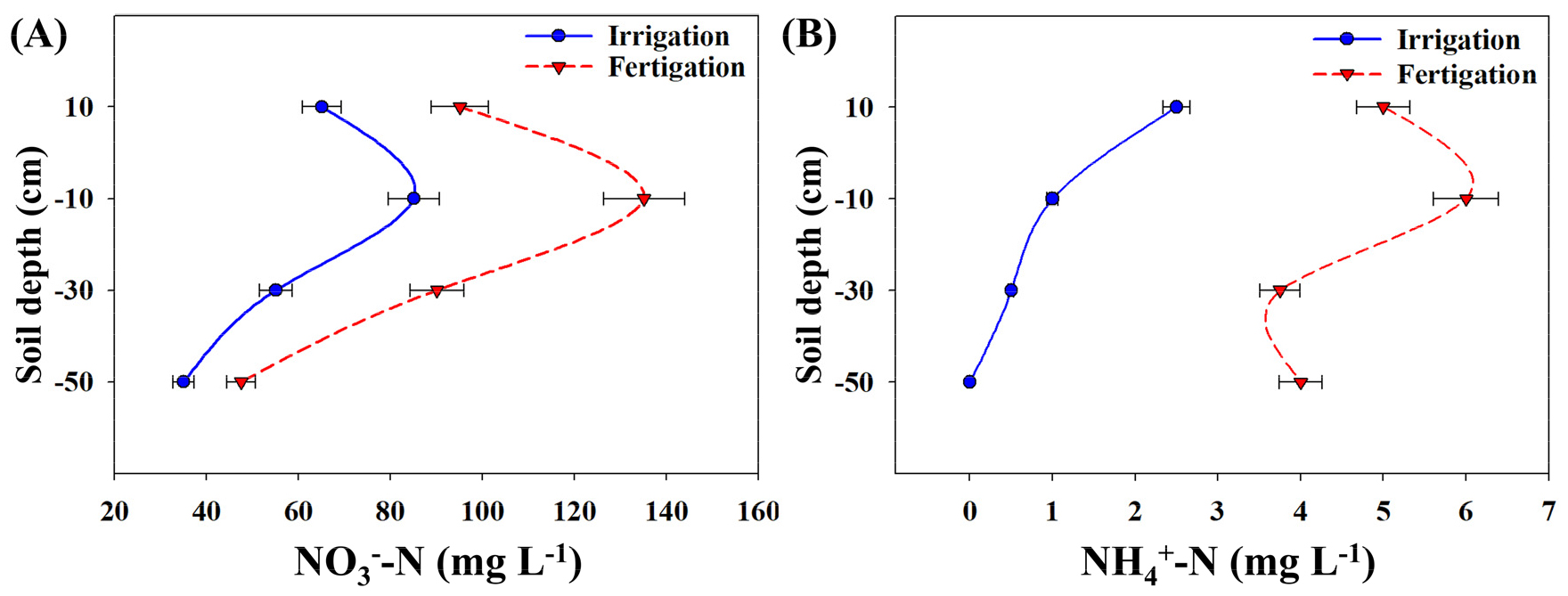
Two treatments, irrigation and fertigation (N8), were investigated to evaluate changes in soil moisture content and EC over date. The results showed that there was no significant difference in soil moisture content at the surface after the irrigation and fertigation treatments (Fig. 4A). However, two days after treatment, a significant difference in soil EC was observed between treatments (Fig. 4B). A significant increase in EC was observed in the fertigation treatment. Furthermore, EC was found to be high on the surface due to the nitrogen diffusion until 3 days after fertigation treatment. It was also found that the EC in the fertigation treatment was consistently higher than in the irrigation treatment. After 3 days of fertigation, the N content (NO3--N and NH4+-N) was monitored at different soil depths to estimate N diffusion. The fertigation treatment resulted in higher NO3--N content at all soil depths compared to the irrigation treatment (Fig. 5A). Similarly, NH4+-N showed a comparable trend to nitrate nitrogen, with its level about four times higher than those observed in the irrigation treatment (Fig. 5B). The highest concentrations of NO3--N were found about -10 cm below the soil surface, while the lowest concentrations were identified at -50 cm, which is deeper than the -40 cm depth where SDI tubes were installed. The maximum concentration of NH4+-N was similarly observed around -10 cm, while the lowest values were found between -30 cm and -50 cm. These findings provide evidence that nitrogen compounds diffuse throughout the soil as a result of subsurface fertigation. However, the concentrations of NO3--N and NH4+-N were lower in the ridges (+10 cm) than in the underground (-10 cm). Nutrient flow in soil is predominantly driven by convection-dispersion and capillary action mechanisms (Choi et al., 2011; Šimůnek and Hopmans, 2009). Convection-dispersion is the process by which nutrients flow through the soil matrix along with water movement. Capillary action is a transfer of nutrients as water moves through soil particles (Choi et al., 2011; Šimůnek and Hopmans, 2009). As a result, it appears that N did not sufficiently reach the ridges, as fertigation was stopped once soil moisture reached saturation at a depth of -10 cm, where the majority of maize roots are distributed. Given the scarcity of roots in the ridge area, lower nitrogen concentrations in this zone are unlikely to negatively affect plant growth.
Effects of irrigation and fertigation treatments on photosynthetic indicators
During the early-growth stage of the ‘Ilmichal’ cultivar, no significant differences were observed among treatments in terms of net CO2 assimilation and transpiration rate (Fig. 6). However, during the mid-growth stage, N10 and N8 treatments exhibited the highest net CO2 assimilation rates, with LF maintaining the highest values during the late-growth stage. Overall, N8 showed the highest tendency toward increased net CO2 assimilation rate, although there was no statistically significant difference among IR, N10, and LF. In contrast, statistically significant differences were observed between the Control (N0) and all topdressing treatments (N6, N8, N10, and LF) including irrigation (IR). Transpiration rates were similarly increased in both N10 and LF treatments during the middle and late-growth stages. Overall, the LF and IR treatments exhibited higher transpiration rates compared to the N topdressing treatments. However, although intercellular CO2 concentration showed statistically significant differences among treatments, no consistent trend was observed. Notably, the intercellular CO2 concentration was maintained at higher levels in non-fertigation treatments (Cont. and IR) compared to fertigation treatments.
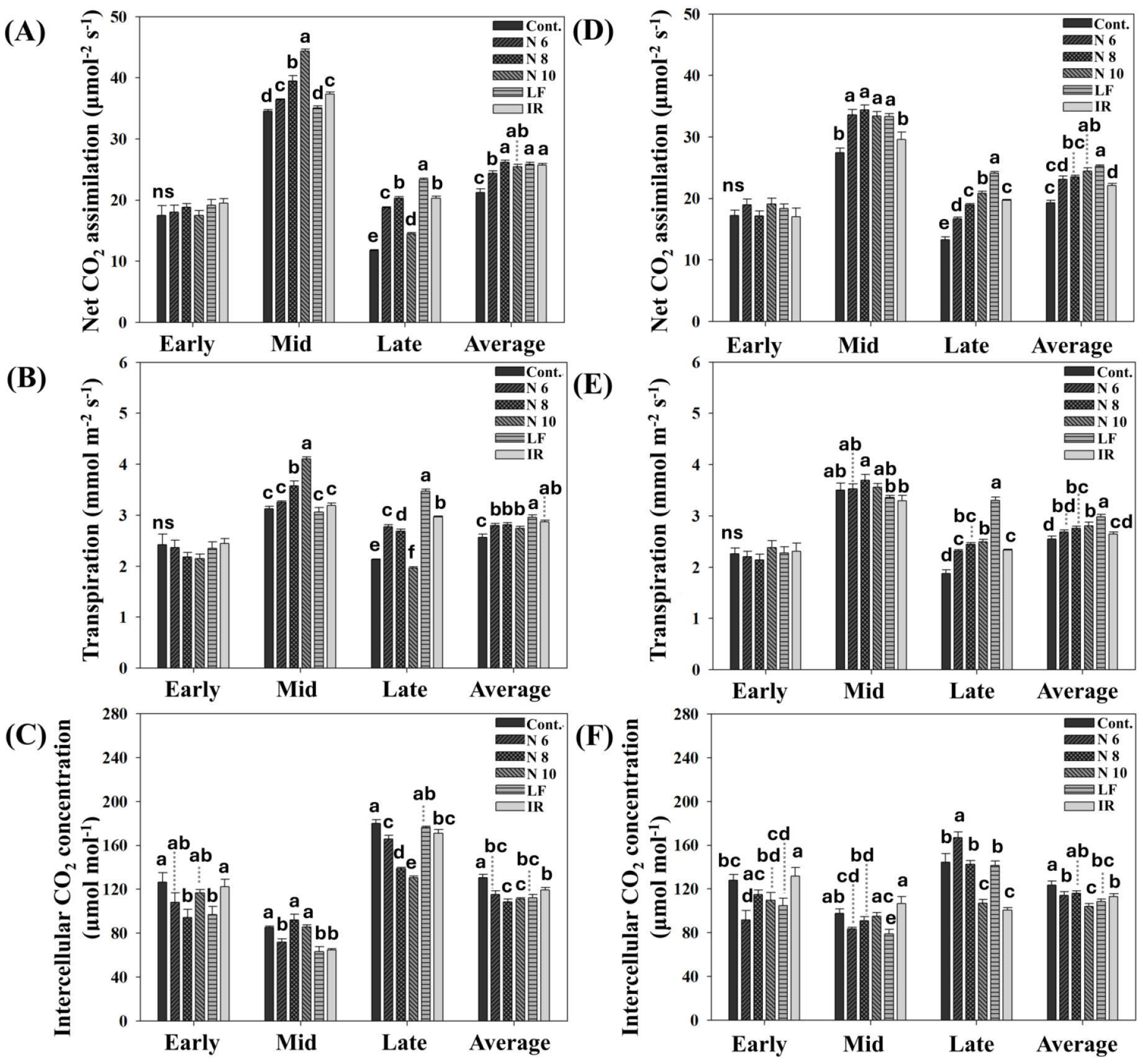
Fig. 6
Changes in net CO2 assimilation (A, D), transpiration (B, E), and intercellular CO2 concentration (C, F) by growth stage in maize ‘Ilmichal’ (A–C) and ‘VSC03’ (D–F) cultivars following subsurface fertigation. Early, middle, and late indicate 25, 50, and 80 days post-sowing, respectively. N, IR, and LF denote the amount of N applied (kg 10a-1), irrigation, and liquid fertilizer, respectively.
The ‘VSC03’ cultivar also exhibited no significant variation in photosynthetic indicators during the early-growth stage, similar to the ‘Ilmichal’ cultivar. Net CO2 assimilation rates were higher in treatments N8, N6, N10, and LF during the mid-growth stage, and LF showed the highest values during the late-growth stage. Therefore, net CO2 assimilation rates were higher in the N10 and LF treatments. Transpiration rates showed no significant differences among treatments during the early-growth stage; however, the highest rates were found in N8 during the mid-growth stage and in LF during the late-growth stage. Overall, transpiration rates were highest in the LF treatment. Intercellular CO2 concentrations varied among treatments; however, no significant trend was observed. Similar to the ‘Ilmichal’ cultivar, the non-fertigation treatment tended to exhibit higher values than the fertigation treatment.
Net CO2 assimilation and transpiration rates were highest across all treatments during the mid-growing stage. Conversely, intercellular CO2 concentration peaked during the late-growth stage, regardless of treatment, likely influenced by seasonal transitions from spring to summer. The increase in water vapor pressure difference between the atmosphere and the plant enhances transpiration, leading to greater water loss. In response, stomatal closure occurs to minimize water loss, which results in an accumulation of CO2 within the intercellular spaces (Shrestha et al., 2021). Additionally, plants tend to maintain elevated intercellular CO2 concentrations within leaves under conditions of soil water deficiency to sustain photosynthetic activity. Consequently, the control treatment (N0) exhibited higher intercellular CO2 concentrations compared to the topdressing treatments.
It has been observed that the net photosynthetic rate and transpiration rate of maize were highest during the silking stage compared to the grain-filling and milk stages. The silking stage is the period when photosynthesis is critically required (Park et al., 2015; Xie et al., 2014). Additionally, the photosynthetic rate of maize is a key factor in maintaining chlorophyll activity, with leaf senescence leading to a decline in photosynthetic capacity (Xie et al., 2014). Applying an appropriate amount of N and Si (silicon) can sustain photosynthetic capacity, delay leaf senescence, and ultimately enhance crop yield (Cao et al., 2013; Guo et al., 2021). Consequently, the timely application of an optimal N level can increase yield by improving photosynthetic efficiency, including chlorophyll activity (Liu et al., 2019). However, excessive N application can lead to excessive vegetative growth, interference with the nutritional requirements necessary for grain development, and promotion of leaf senescence, which ultimately results in a decrease in yield (Park et al., 2015; Xing et al., 2021). Fryer et al. (1998) observed that low temperatures during maize growth adversely affected photosynthetic efficiency and the activity of enzymes associated with photosynthesis. As a result, the photosynthetic capacity was lowest during the early-growth stage in both cultivars examined in this study, likely attributable to the low temperatures of this period. Photosynthetic activity peaked during the mid-growth stage across all treatments, which is presumed to be due to rising temperatures and the maize’s silking stage, a period that demands high photosynthetic activity. Overall, N topdressing and LF applications enhanced photosynthetic activity, although minor differences were observed between the topdressing treatments and cultivars.
Growth characteristics of above-ground and underground parts
The investigation into aboveground growth responses following subsurface fertigation treatments in the ‘Ilmichal’ and ‘VSC03’ cultivars revealed that both cultivars exhibited the highest stem height under the N8 treatment (Fig. 7). The highest ear heights were observed in the N10 and LF treatments for ‘Ilmichal’, and in N8, N10, and LF treatments for ‘VSC03’. Treatments with N8, N10, and LF also resulted in increased leaf area in both cultivars. Stem diameter was larger in the LF, N10, N8, and N6 treatment order across both cultivars, whereas it was smaller in the irrigation and control (N0). Overall, the N8 treatment produced the highest growth performance, followed by N10, LF, N6, Cont, and IR treatments in that order.
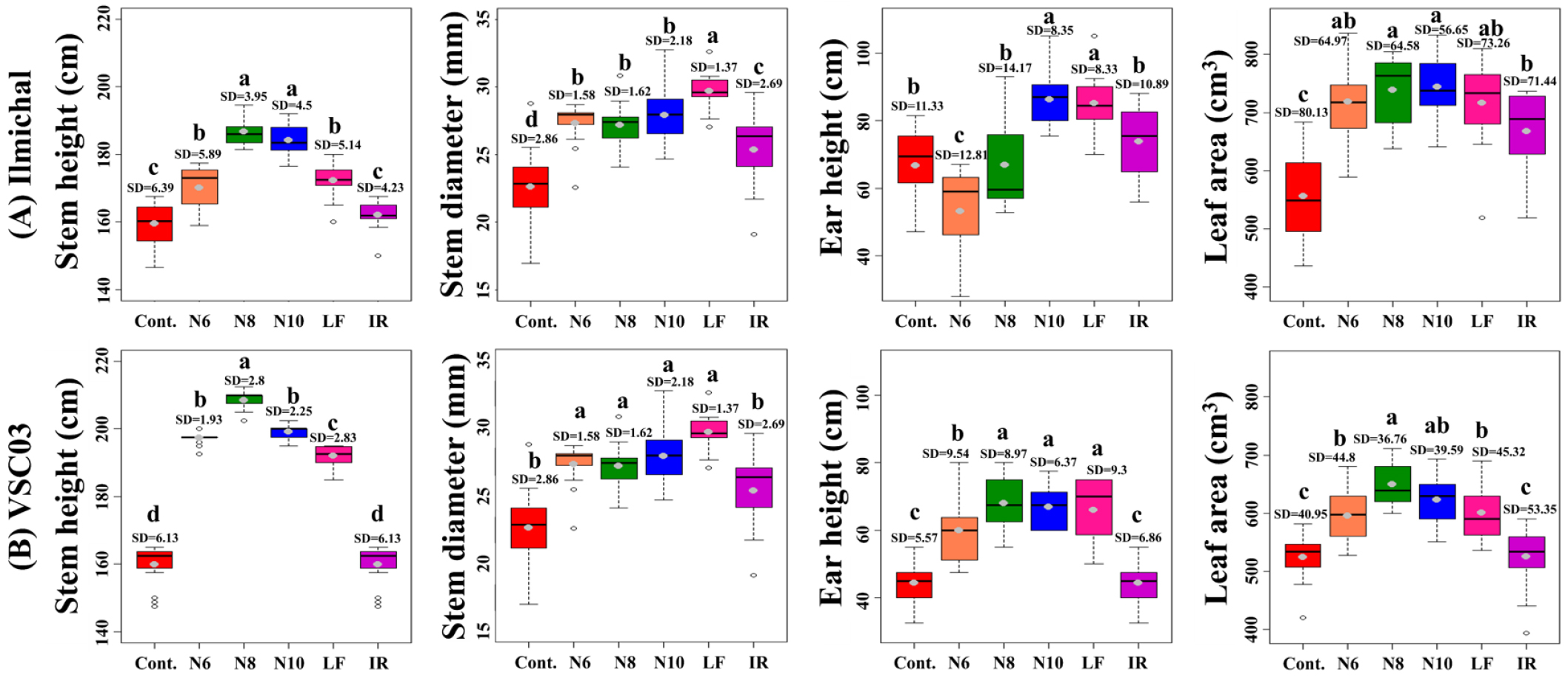
Fig. 7
Boxplot of growth indicators in maize cultivars according to subsurface fertigation treatment. N, Cont., LF, and IR denote the amount of N applied (kg 10a-1), control, liquid fertilizer, and irrigation, respectively. The gray circles in boxes, SD, and different letters indicate the mean, standard deviation, and significant differences within the column at P < 0.05 using DMRT, respectively.
The study assessed the growth and distribution of maize roots at various soil depths under different subsurface fertigation treatments. The N8 treatment, identified as the most effective, was evaluated in comparison with liquid fertilizer (LF), irrigation (IR), and the control (N0). The ‘Ilmichal’ and ‘VSC03’ cultivars exhibited the most extensive root systems, characterized by thick roots at the 0–20 cm soil layer, medium-thick roots at 20–40 cm, and thin roots at 40–60 cm (Fig. 8). The total root distribution (volume) by soil depth was greatest at 0–20 cm for both ‘Ilmichal’ and ‘VSC03’ cultivars, followed by 20–40 cm and 40–60 cm (Fig. 8). ‘Ilmichal’ exhibited the widest distribution in the LF treatment, primarily within the 0–20 cm layer, whereas ‘VSC03’ was most extensively distributed in the N8 treatment. At 20–40 cm depths, the LF treatment showed the most extensive root distribution for ‘Ilmichal’. The ‘VSC03’ cultivar was widely distributed across the N8, LF, and IR treatments, and the lowest distribution was observed in the control treatment. At depths ranging from -40 to -60 cm, both cultivars exhibited a higher tendency in N8, LF, and IR treatments.
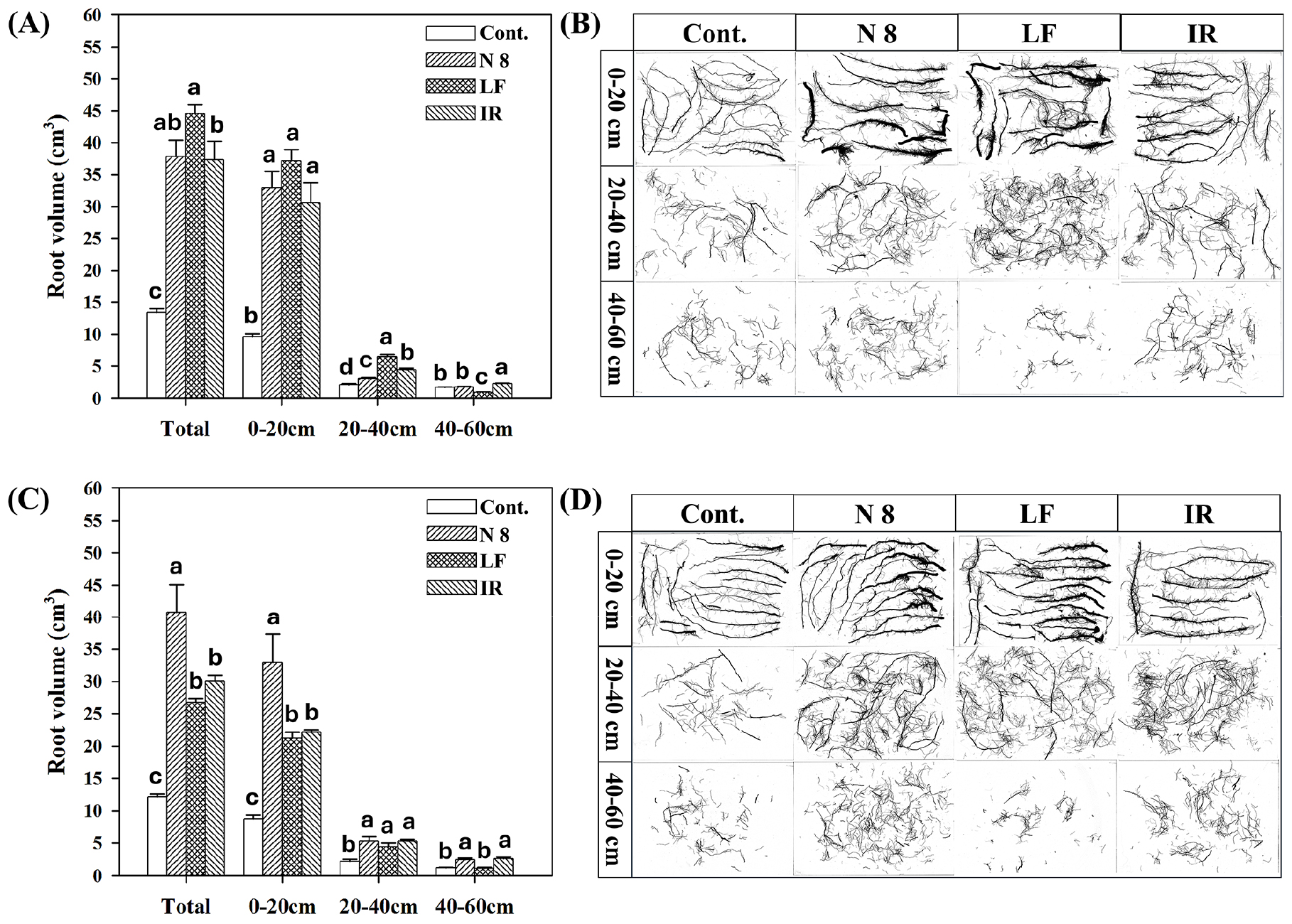
Fig. 8
Images of root systems and the distribution of roots at various soil depths under subsurface fertigation in ‘Ilmichal’ (A, B) and ‘VSC03’ (C, D) cultivars analyzed using the WinRHIZO program. N, Cont., LF, and IR denote the amount of nitrogen applied (kg 10a-1), control, liquid fertilizer, and irrigation, respectively.
The N8 and LF treatments produced the greatest root volumes. Furthermore, fertilizer treatments, including N8 and LF, resulted in significantly larger root volumes compared to control (N0) and irrigation treatments. It has been reported that root growth is promoted in soil regions with high nitrogen and moisture content. However, when nitrogen concentrations in the soil exceed optimal levels, plant growth becomes inhibited, resulting in a parabolic relationship between nitrogen concentration and root length (Wang et al., 2005; Zhang and Peterson, 1999). This study confirmed that irrigation and fertigation through SDI system significantly enhanced root growth compared to the control treatment.
One of the primary advantages of subsurface fertigation is its ability to efficiently enhance nitrogen uptake and translocation into plant tissues by delivering nitrogen and water directly to the subsurface zone of the root zone (Di Paolo and Rinaldi, 2008; Wang et al., 2021). Numerous studies have indicated that the optimal nitrogen application amount for achieving the highest crop yield generally falls within the range of 15 to 25 kg 10a-1 (Feng et al., 2016; Mohammed et al., 2022; Ordóñez et al., 2021; Türk and Alagöz, 2018; Wang et al., 2021). However, there are reports suggesting that exceeding nitrogen application amount of 20 to 30 kg 10a-1 —particularly in cases of excessive fertilization— may lead to a decline in yield (Raza and Farmaha, 2022; Türk and Alagöz, 2018). In this study, optimal growth and yield were observed at an application amount of approximately 8 kg N 10a-1. Both higher and lower application amounts resulted in reduced growth and yield. Furthermore, the N8 treatment involved the application of 8 kg N 10a-1 as a basal fertilizer, followed by an additional 8 kg N 10a-1 as a topdressing, culminating in a total application amount of 16 kg N 10a-1. This finding roughly aligns with the lower range of economically optimal nitrogen application amount reported in previous studies above. The use of SDI in maize cultivation reportedly increased nitrogen utilization efficiency (NUE) by 8-14%, or approximately 1.4 kg N 10a-1 compared to surface fertigation (Callau-Beyer et al., 2024). Patra et al. (2023) also reported that this improved NUE and increased maize yield by 20%. In a previous study conducted at the same experimental site as the present study, it was reported that nitrogen uptake efficiency with subsurface drip irrigation (SDI) was approximately 39% (Cho et al., 2025). These findings demonstrated that the nitrogen use efficiency (NUE) of SDI was higher compared to conventional surface topdressing which has been reported to have a relatively low efficiency ranging from 16.2% to 31.1% (Liang and Yoshihira, 2022; Szulc et al., 2016). Consequently, it is likely that fertilizer applied via SDI is absorbed more effectively by the plants.
The optimal N application amount for maize exhibits considerable variability among researchers, likely due to differences in soil properties, meteorological conditions, and fertilization timing. Notably, the amount of N applied is closely associated with root elongation, which appears to be significantly influenced by soil texture, fertilization timing, and moisture content (Feng et al., 2016; Ordóñez et al., 2021).
Growth and yield characteristics
The results of evaluating the yield components of the ‘Ilmichal’ cultivar under subsurface fertigation treatments indicated that ear length and width did not differ significantly with topdressing and irrigation treatments, except in the control treatment. However, indicators such as RKSEL, hundred-kernel weight, and number of kernels were all significantly higher in the LF, N10, and N8 treatments (Table 3). The number of ears and overall yield were high in the order of LF, N8, and N10, although there were no statistically significant differences among these treatments. The length and width of the ear, as well as the RKSEL in the ‘VSC03’ cultivar, were greatest in the LF, N8, and N10 treatments, and there were no statistically significant differences among these treatments (Table 4). The hundred-kernel weight was higher in the topdressing treatments compared to the control and IR treatments; however, there were no significant differences among the various topdressing treatments. The number of kernels was highest in the N8 treatment, and both the number of ears and overall yield tended to be highest in N8, followed by LF and N10.
Table 3.
The effect of subsurface fertigation treatments on the yield components of the ‘Ilmichal’ cultivar.
Table 4.
The effect of subsurface fertigation treatments on the yield components of the ‘VSC03’ cultivar.
In general, the application of an appropriate N topdressing amount has been shown to enhance yield, hundred-kernel weight, and ear length and width (Adeniyan et al., 2014; Lim et al., 2014). During the silking period—specifically, the 15 days before and after—climatic conditions and nitrogen application have the most significant influence on RKSEL, number of ears, and kernel number per ear (Ma et al., 2017; Millet et al., 2019; Wang et al., 2023).
The ‘Ilmichal’ cultivar exhibited high yields in the order of LF, N8, N10, and N6; however, there were no statistically significant differences among these treatments. Notably, a substantial difference was observed between the LF, N topdressing and non-topdressing treatments (Cont, IR). Additionally, the yield of the ‘VSC03’ cultivar tended to be higher in the N8, LF, N10, and N6 treatment order. Similar to the ‘Ilmichal’ cultivar, a significant difference was observed between the topdressing and non-topdressing treatments.
Consequently, this study demonstrated that topdressing application using the SDI system can support stable maize production by supplying essential water and nutrients during the V6 and silking period, which directly influences yield. However, slight variations in yield may occur depending on the amount of topdressing applied. In terms of yield, the ‘VSC03’ cultivar exhibited the highest yield in the N8 treatment, while the ‘Ilmichal’ cultivar showed the highest tendency in the LF treatment. However, in both cultivars, there was little difference in yield between the N8 and LF treatments. This observation is likely attributable to the fact that both LF and N8 treatments provide the same amount of nitrogen. Additionally, it has been confirmed that LF can enhance growth and yield by up to N8 levels (8 kg N 10a-1). However, applying amounts exceeding N10 levels (10 kg N 10a-1) tends to result in a decrease in yield across both cultivars. Therefore, the use of LF through SDI necessitates the application of an optimal amount to prevent excessive application and ensure maximum efficiency. As a result, the application of nitrogen (N) and liquid fertilizer (LF) topdressing through the SDI system during the V6 and silking growth stages promotes healthy maize plant growth, thereby enhancing RKSEL and overall yield. However, excessive N application may induce excessive vegetative growth, which can reduce RKSEL and consequently lead to a decline in yield.
CONCLUSION
The topdressing of nitrogen (N) and liquid fertilizer (LF) through an SDI system buried at a depth of 40 cm was confirmed to facilitate the movement of nutrients toward the soil surface. Optimal N topdressing levels were determined to accelerate both root development and overall plant growth, thereby increasing yield. However, the optimal levels of N and LF vary depending on maize cultivars. To effectively apply these fertilizers across different cultivars, it was first necessary to establish the optimal topdressing amounts required for each cultivar. Therefore, maize topdressing using an SDI system can accelerate growth by supplying N and water during critical growth stages (V6 and silking), periods required by high nutrient and water demands. This approach resulted in increased yield with higher RKSEL. Notably, the application of liquid fertilizer (LF) through the SDI system, similar to chemical fertilizer application, was demonstrated to be effective.